News
24 December 2025
Share:
Our Impact
We Bring Government and Private Sector Together to Drive Indonesia Economic Growth
27 January 2026
27 October 2025
02 October 2025
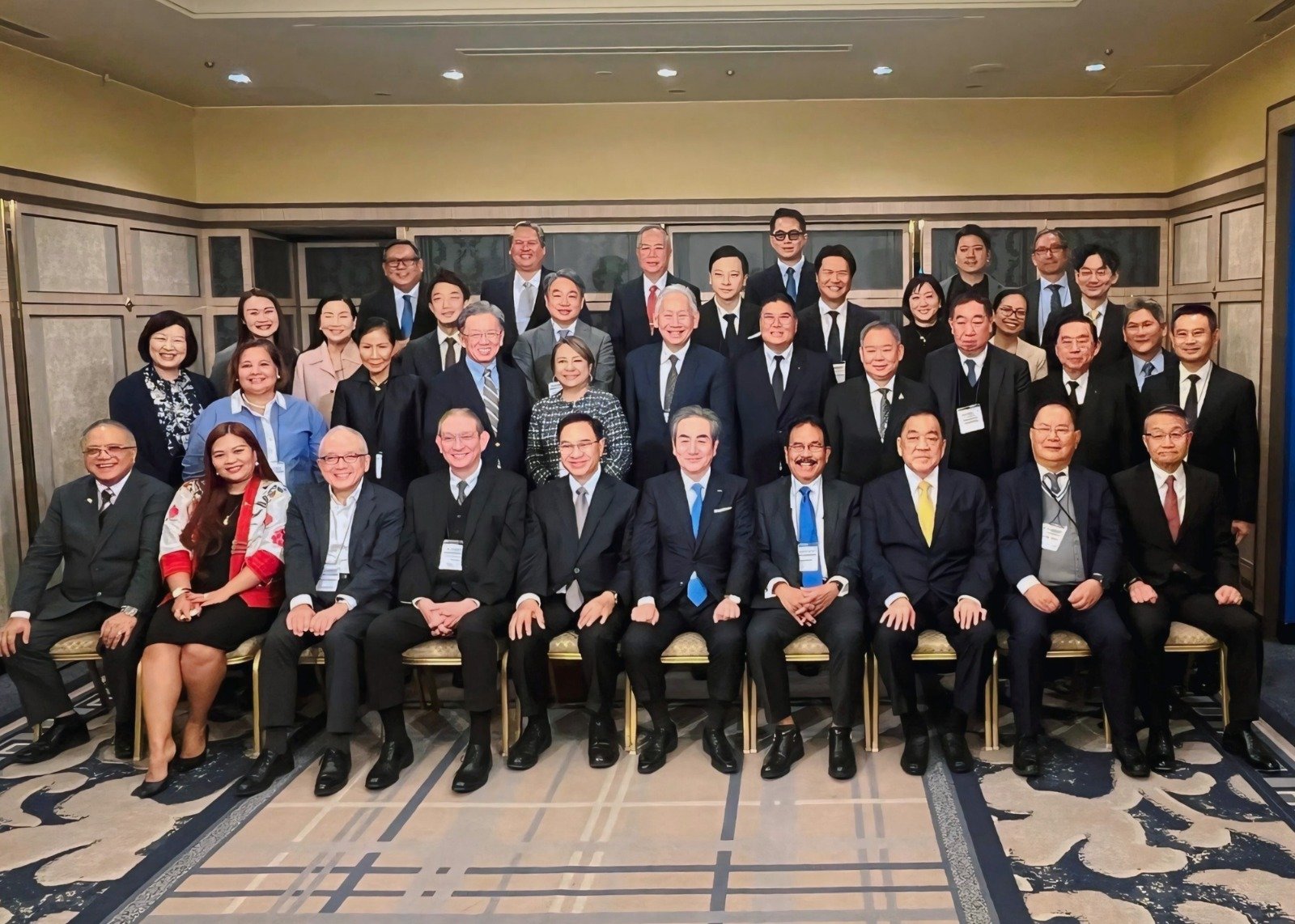
The Indonesian Business Council (IBC) recently participated in the ASEAN–Japan Network for Engagement and Transformation (AJ-NEXT), a high-level business dialogue hosted by Keizai Doyukai, the Japan Association of Corporate Executives. Keizai Doyukai brings together leaders from some of Japan’s most prominent corporations, many of which have long-standing and significant operations across Southeast Asia.
AJ-NEXT represents an evolution of the long-running ASEAN–Japan Business Meeting (AJBM), which had served as the primary platform for ASEAN–Japan business dialogue for decades. The upgrade reflects a deliberate shift in ambition: moving beyond dialogue for its own sake toward generating more concrete outcomes, actionable collaboration, and real transformation in ASEAN–Japan economic relations.
Held in Tokyo on 4–5 December 2025, the forum convened senior business leaders from across Southeast Asia, including strong delegations from Thailand and the Philippines and alongside Indonesia represented by IBC. Many of these participants are national partners or key operators for Japanese firms in sectors such as automotive, retail, fashion, and food and beverage, highlighting the depth of Japan’s long-standing commercial footprint in the region.
Under the theme “Building Resilient, Sustainable Growth in a Multipolar, Uncertain World,” the dialogue offered a timely and candid assessment of global and regional economic trends, as well as the future direction of Japanese investment in ASEAN. This discussion took place against the backdrop of increasing geopolitical uncertainty and economic fragmentation, prompting many countries in the region to reassess and sharpen their foreign economic strategies.
A core objective of the dialogue was to review current global and regional economic dynamics, identify domestic priorities shaping future ASEAN–Japan relations, and clarify shared interests that could further strengthen bilateral and regional cooperation. One notable and recurring concern raised by several ASEAN participants was the perceived decline or stagnation of Japanese investment flows into the region, particularly when compared with the rapid expansion of Chinese investment. This raised difficult but important questions about Japan’s competitiveness and positioning in ASEAN.
Against this backdrop, participants explored whether the challenges lie on the Japanese side, the ASEAN side, or both and, more importantly, what solutions could restore momentum. The IBC delegation contributed to this discussion by encouraging a clearer articulation of Japan’s unique value proposition in ASEAN. This includes a stronger focus on future-oriented industries, sustained investment in human capital, and a deeper commitment to technology transfer, all of which can deliver long-term benefits for ASEAN economies beyond headline investment figures.
Japanese government representatives at the dialogue reaffirmed ASEAN’s strategic importance to Japan. This was underscored by Prime Minister Sanae Takaichi’s first overseas visit to attend the ASEAN Summit in Kuala Lumpur in November 2025. Japan reiterated its commitment to the Free and Open Indo-Pacific (FOIP) framework as a cornerstone of its regional diplomacy, emphasizing peace, stability, and rules-based cooperation and its alignment with ASEAN Outlook on Indo-Pacific (AOIP). In addition to continued Official Development Assistance (ODA), Japan highlighted the expansion of Official Security Assistance (OSA) as part of its broader, long-term engagement with the region.
On the economic front, Japan outlined ongoing co-creation initiatives with ASEAN partners and noted the ongoing review of the ASEAN–Japan Comprehensive Economic Partnership Agreement (CEPA) to better meet ASEAN countries’ expectations for deeper and more balanced trade relations. In the energy sector, Japan reaffirmed its commitment to supporting ASEAN’s simultaneous goals of economic growth, energy security, and decarbonization, particularly through the Asia Zero Emission Community (AZEC) initiative.
Country-level discussions highlighted diverse domestic priorities. Thai business representatives emphasized food security and tourism, pointing to opportunities to learn from Japan’s best practices in technology, capacity-building, and service excellence, particularly in hospitality. Philippine representatives focused on agricultural cooperation, stressing the need to better align supply and demand dynamics between the two economies.
Representing Indonesia, IBC member Bani Mulia of Samudera Indonesia highlighted strategic opportunities in the maritime and shipping sectors, calling for stronger Japanese collaboration to enhance Indonesia’s national connectivity and logistics capacity. He emphasized that improved connectivity is a critical enabler of competitiveness and a foundation for Indonesia’s long-term economic growth.
More importantly, given the scale and strategic importance of Indonesia’s maritime sector, there is substantial untapped potential for deeper Japanese investment. As the world’s largest archipelagic state, Indonesia’s maritime industry, spanning shipping, ports, logistics, shipbuilding, and marine services offers significant opportunities for collaboration. Greater Japanese participation could help accelerate productivity, strengthen connectivity, and upgrade technology and standards.
In addition, Indonesia and the Philippines both raised the importance of expanding cooperation in human capital development, including increasing the quality and scale of skilled labor mobility to Japan. Both countries are well positioned to help address Japan’s labor shortages amid its declining population, while also generating skills transfer and income opportunities for their domestic workforces.
IBC CEO Sofyan Djalil further underscored the need to strengthen the ecosystem supporting Indonesian migrant workers in Japan, highlighting regulatory and operational challenges that require closer government-to-government coordination. His call for a more supportive policy environment received strong backing from the Philippine delegation, reflecting shared priorities as two of Japan’s largest sources of foreign labour.
In conclusion, Japan remains one of ASEAN’s most important strategic partners, not only for its historical role in building the region’s manufacturing base, but also for its potential contribution to future re-industrialization, competitiveness upgrading, human capital development, and regional connectivity, including in infrastructure and energy. Japan can be the reliable partner to unlock new and sustainable growth engines for ASEAN in the years ahead.
As global geopolitics grow more complex, Japan’s role in ASEAN and its evolving relationship with China will be closely watched. The AJ-NEXT dialogue underscored both the challenges and the opportunities ahead, as ASEAN and Japan seek to redefine their partnership for a more uncertain but interconnected future.